Jaguar Sovereign
Registered from 1995 to 2002.
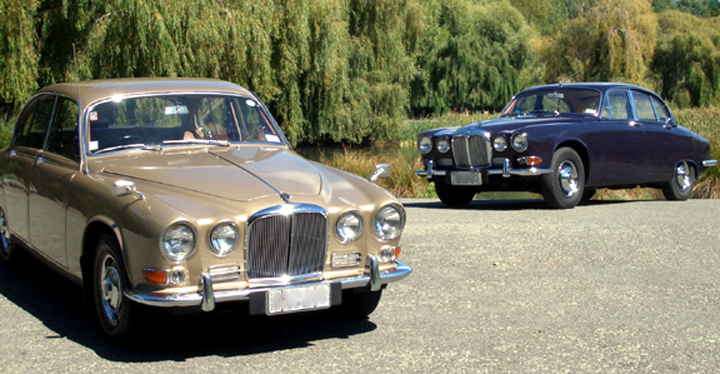
About this model
The Jaguar 420 and its Daimler Sovereign equivalent were introduced at the October 1966 London Motor Show and produced for two years as the ultimate expression of a series of "compact sporting saloons" offered by Jaguar throughout that decade, all of which shared the same wheelbase. Developed from the Jaguar S-Type, the 420 cost around £200 more than that model and effectively ended buyer interest in it, although the S-Type continued to be sold alongside the 420/Sovereign until both were supplanted by the Jaguar XJ6 late in 1968.
From the Wikipedia article Jaguar 420 and Daimler Sovereign (1966–1969), licensed under CC BY-SA 4.0.
What fails its inspection
Great Britain's MOT record for the 1999 4.0 petrol. 9 of 44 tests failed.
| Where | Share of failures | Failed tests |
|---|---|---|
| Body and structure | 56% | 5 |
| Exhaust and emissions | 44% | 4 |
| Lights and electrics | 22% | 2 |
| Suspension | 22% | 2 |
| Tyres and wheels | 22% | 2 |
| Brakes | 11% | 1 |
The defects inspectors cite
- Body, cab or chassis excessively corroded at a mounting point
- Lambda coefficient outside the default limits or the range specified by the manufacturer
- Emissions levels exceed default limits
- Exhaust system leaking or insecure
- Tyre tread depth not in accordance with the requirements
- Vehicle structure corroded to the extent that the rigidity of the assembly is seriously reduced
Before you buy one
Built from what this car fails on, not from general knowledge of the model.
- Exhaust and emissions — 44% of its failures
- Lambda coefficient outside the default limits or the range specified by the manufacturer
- Emissions levels exceed default limits
- Exhaust system leaking or insecure
- Suspension — 22% of its failures
- A spring or spring component fractured or seriously weakened
- Tyres and wheels — 22% of its failures
- Tyre tread depth not in accordance with the requirements
- A tyre seriously damaged
- Brakes — 11% of its failures
- Lights and electrics — 22% of its failures
- Body and structure — 56% of its failures
- Body, cab or chassis excessively corroded at a mounting point
- Vehicle structure corroded to the extent that the rigidity of the assembly is seriously reduced