Saab 93
Registered in 2005.
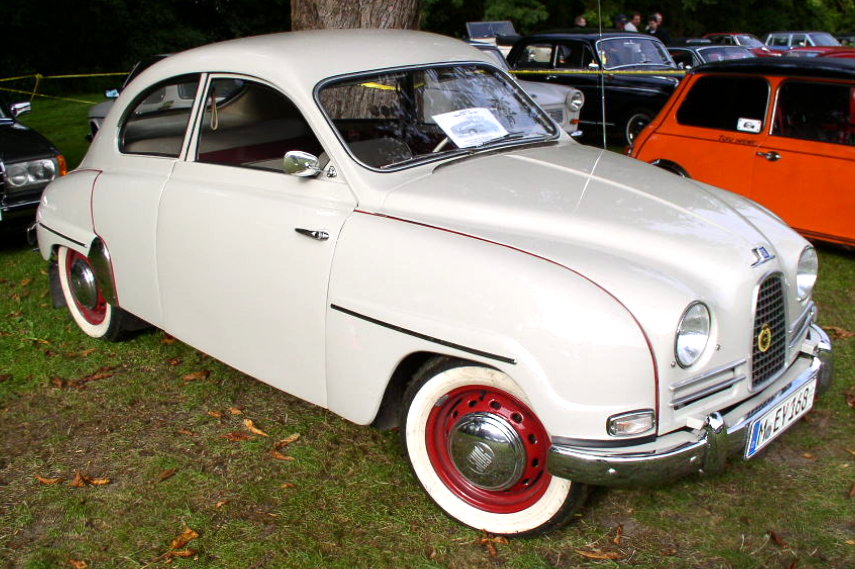
About this model
The Saab 93 is the second production automobile that was manufactured by Swedish automaker Saab. Styled by Sixten Sason, it was first presented on December 1, 1955. The 93 was powered by a longitudinally-mounted three-cylinder 748 cc Saab two-stroke engine giving 33 hp (25 kW). The gearbox had three gears, the first unsynchronised. In order to overcome the problems of oil starvation on overrun for the two-stroke engine, a freewheel device was fitted. In 1957, two-point seatbelts were introduced as an option. The 93 was the first Saab to be exported from Sweden, with most exports going to the United States. A Saxomat clutch and a cabrio coach were available as options.
From the Wikipedia article Saab 93, licensed under CC BY-SA 4.0.
What fails its inspection
Great Britain's MOT record for the 2005 2.0 petrol. 5 of 12 tests failed.
| Where | Share of failures | Failed tests |
|---|---|---|
| Lights and electrics | 40% | 2 |
| Suspension | 40% | 2 |
| Body and structure | 20% | 1 |
| Brakes | 20% | 1 |
| Exhaust and emissions | 20% | 1 |
| Tyres and wheels | 20% | 1 |
The defects inspectors cite
- The aim of a headlamp is not within limits laid down in the requirements
- A spring or spring component fractured or seriously weakened
- A suspension pin, bush or joint excessively worn
- A transmission shaft constant velocity joint boot missing or no longer prevents the ingress of dirt etc
- Engine MIL illuminated indicating a malfunction
- Parking brake efficiency below minimum requirement
Before you buy one
Built from what this car fails on, not from general knowledge of the model.
- Suspension — 40% of its failures
- A spring or spring component fractured or seriously weakened
- A suspension pin, bush or joint excessively worn
- Brakes — 20% of its failures
- Parking brake efficiency below minimum requirement
- Parking brake inoperative on one side
- Exhaust and emissions — 20% of its failures
- Tyres and wheels — 20% of its failures
- Tyre tread depth not in accordance with the requirements
- Lights and electrics — 40% of its failures
- Body and structure — 20% of its failures